Fastest Way to Recover From a Sports Injury
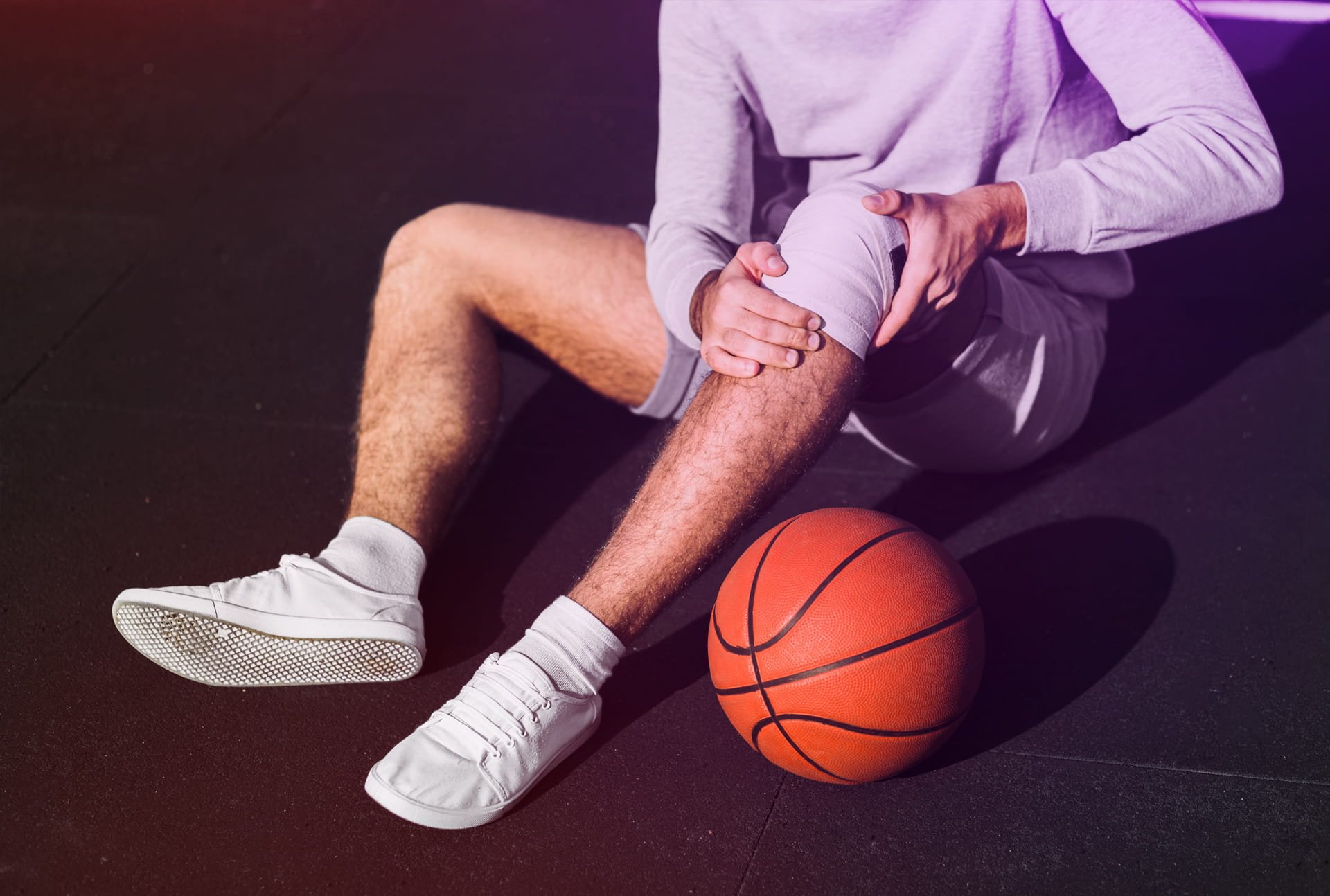
What Is the Fastest Way to Recover From a Sports Injury?
The Ultimate Guide to Active Recovery, Tissue Healing, and Returning to Peak Performance
The fastest way to recover from a sports injury is to move away from total rest (the outdated R.I.C.E. method) and embrace the P.E.A.C.E. & L.O.V.E. protocol. This emphasizes Protection and Elevation initially, followed by Gradual Loading and Vascularization. By utilizing "Active Recovery"—performing pain-free movement to increase blood flow—you stimulate tissue remodeling and prevent muscle atrophy, returning to training significantly faster than through immobilization.
Introduction: The Psychology of the Sidelined Athlete
Picture this. You’ve mastered your weekly health and wellbeing routine. You have been consistently training, well on your way to your body composition goals, energy levels are high and you are hitting new personal bests. But then, the worst happens. A misstep on a run, a "tweak" during a heavy set, or a nagging ache that finally turns into a sharp pain. This causes certain kind of frustration that only active people understand. Sidelined.
The classic treatment advice from the last 40 years was to stop everything. Ice the injury and wait. But what were we really waiting for? Waiting for it to feel better on its own. Sometimes this would be the case, but more often than not you would feel marginal improvement, but never back to its normal feeling pre-injury.
Times have changed. Research has shown there are better protocols. At Tribe Sweat, we view injuries differently. We don't see an injury as a full stop; we see it as a pivot. The "fastest" recovery isn't found in sitting on the sofa with a bag of frozen peas on our knee; it’s found in the science of optimal loading.
This guide breaks down the biological and practical steps to getting you back into "Tribe" as quickly and safely as possible.
1. Out With the Old: Why R.I.C.E. is Obsolete
For a long time, we have based injury recovery on the R.I.C.E protocol (Rest, Ice, Compression, Elevation), seen as the gold standard was the gold standard. But, when the doctor who coined the term (Dr. Gabe Mirkin) questioned his own protocol design in 2014, even devaluing the use of total rest and excessive Ice, something had to change. Here’s why:
Total Rest
The lymphatic system is your body’s drainage and defence network, consisting of a vast web of vessels, nodes, and organs that work together to maintain fluid balance. It does this by collecting excess fluid—called lymph—from tissues and returning it to the bloodstream. The Lymphatic system is ‘powered’ by passive means, meaning that as skeletal muscles contract in the body (through movement) lymph is pumped through vessels. In terms of injury recovery, when you stop moving entirely, your lymphatic system stagnates because you are not moving muscles in your body, therefore the lymphatic system becomes stagnated.
Total rest also begins starts muscle atrophy, the thinning and loss of muscle tissue. 48 hours of inactivity is known as the critical threshold”. Although you won't wake up to visible differences to muscle tissue, the biological process of atrophy begins. The body priorities efficiency over strength, and so the rate of protein synthesis reduces, both the rate at which your body builds new muscle protein, and the rate of proteolysis (breakdown of protein) increases. Also we lose proprioception, or the sense of knowing the joint position. The small stabiliser muscles stop firing in the correct sequence to stabilise the joint.
Excessive ice
Although icing is a great analgesic, and plays a role in preventing inflammation. Inflammation has always been seen to be a bad thing, however it is the body’s first step in repairing soft tissue. Ice causes vasoconstriction which prevents inflammatory cells and growth factors from reaching the injury site of injury. It also slows down the lymphatic systems ability to clear fluids from the area, adding to the stagnation effect spoken about above.
2. The Modern P.E.A.C.E. & L.O.V.E.
So if R.I.C.E. Is not appropriate, what is? The British Journal of Sports Medicine (BJSM) proposed a new acronym that looks at the whole process, from the moment of injury to return to sport or the gym.
Phase 1: Immediately After Injury (P.E.A.C.E.)
* P for Protect: Unload or restrict movement for 1–3 days to minimise further damage.
* E for Elevate: Lift the limb higher than the heart to promote fluid drainage.
* A for Avoid Anti-inflammatories: Avoid meds like Ibuprofen in the first 48 hours, as they can inhibited the natural healing signal.
* C for Compress: Use tape or bandages to limit swelling and tissue haemorrhage.
* E for Educate: Understand your injury. At Tribe Sweat, we believe an educated athlete is a recovered athlete.
Phase 2: After the First 48 Hours (L.O.V.E.)
* L for Load: This is where recovery happens. Use a "Pain Guide" (0–3 out of 10 pain is acceptable) to start putting weight through the tissue.
* O for Optimism: The brain is the control centre for pain. Elevated levels of stress and catastraphising ("I'll never lift again") actually slow down physical healing.
* V for Vascularisation: Choose pain-free cardiovascular activity to pump blood to the area.
* E for Exercise: Restore mobility, strength, and proprioception (balance).
3. The Science of Active Recovery: Why Movement Heals
To understand why the "fastest" recovery requires movement, we must look at Mechanotransduction. This is the process where physical body cells convert a mechanical stimulus (like lifting a weight or walking) into chemical signals.
When you perform controlled, pain-free movement, you are essentially "telling" your collagen fibers how to align. Without movement, the new tissue grows in a messy, "spaghetti-like" fashion (scar tissue) that is weak and prone to re-injury. With supervised 1-2-1 rehab, we ensure that the "load" is just enough to signal repair without causing further damage.
4. The Kinetic Chain: Is Your Injury a Symptom?
One of the reasons injuries become "chronic" is that people only treat the site of the pain. If you have a runner’s knee, but you only treat the knee, you have missed the fact that your hip stabilisers are weak.
Injury Treatment and Management at Tribe Sweat involves a full-body assessment. We look for:
* Upstream issues: Does limited thoracic spine mobility cause your shoulder impingement?
* Downstream issues: Does a collapsed arch in your foot cause your lower back pain?
By fixing the movement pattern while the tissue heals, your recovery isn't just fast—it’s permanent.
5. Nutrition: The Building Blocks of Repair
You cannot build a house without bricks, and you cannot repair a tendon without the right nutrients. During recovery, your metabolic rate increases because healing is energy intensive.
* Protein is Non-Negotiable: Aim for 1.8g to 2.2g of protein per kilogram of body weight. Collagen peptides combined with Vitamin C have also shown significant promise in tendon and ligament repair.
* Omega-3 Fatty Acids: Once the initial 48-hour inflammatory "burst" is over, high-quality fish oils help manage chronic inflammation and joint health.
* Calorie Maintenance: Many people try to "starve" themselves when they are injured because they aren't training as hard. This is a mistake. A caloric deficit will significantly delay your recovery speed.
6. Sleep: The Natural Growth Hormone
The most potent recovery tool in existence is free: Sleep. During deep sleep (REM and Stage 3), your body releases Human Growth Hormone (HGH). This is the primary driver for tissue regeneration and muscle protein synthesis. If you are sleeping 5–6 hours a night while injured, you are likely doubling your recovery time. Aim for 8 hours to give your body the "night shift" it needs to repair the damage.
7. The Roadmap Back to the "Tribe"
How do you know when you’re ready to transition from rehab back to your normal training routine? We follow a tiered progression:
* Isometrics: Holding a position under tension (e.g., a wall sit for knee pain). This builds strength without aggravating the joint.
* Eccentrics: Focusing on the "lowering" phase of a movement to strengthen tendons.
* Concentric Strength: Moving through a full range of motion.
* Plyometrics and Speed: The final stage—returning to explosive movements.
Conclusion: Don't Waste Your Injury
An injury is an opportunity to work on your weaknesses. If you can't squat because of a knee tweak, it’s the perfect time to build world-class upper-body strength and core stability.
The fastest way to recover is to stay connected to your routine, keep your mindset positive, and follow a protocol based on loading rather than leaving.
At Tribe Sweat, we specialise in navigating this journey. Whether you need a specific Injury Treatment and Management plan or want to modify your Shared Personal Training sessions to work around a limitation, we are here to ensure you do not just get back to where you were—you get better.