Grip Strength and Heart Health
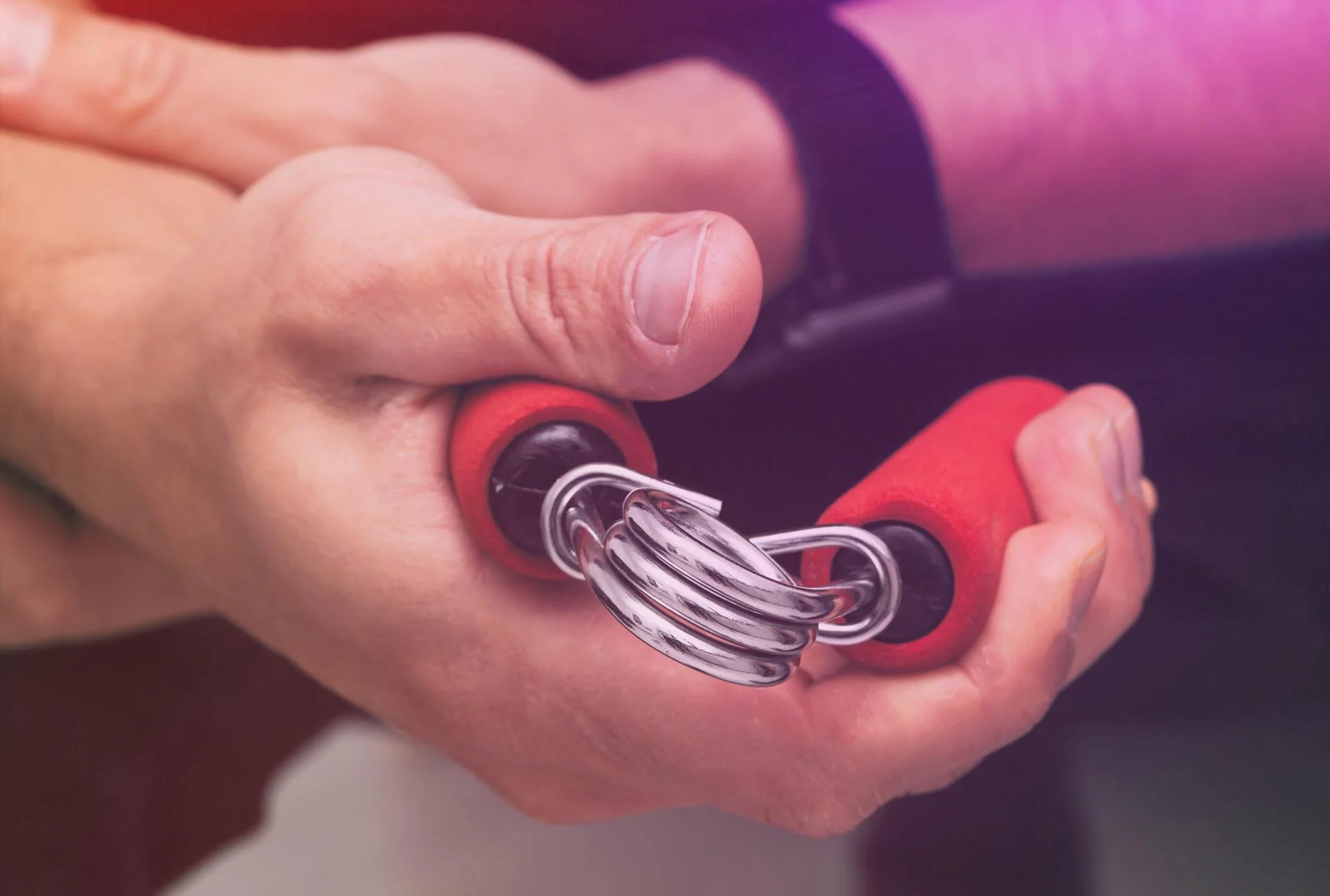
Grip strength, measured with a simple handheld dynamometer, has become one of the most closely studied indicators in cardiovascular research over the past decade. For professionals who exercise regularly but rarely think beyond the treadmill or the weekly five-a-side game, this is worth pausing on. A squeeze test taking less than thirty seconds now sits alongside blood pressure and cholesterol as a marker researchers use to estimate cardiovascular risk. Understanding why hand strength says anything meaningful about the heart requires looking at what grip strength represents in the body, and what the data shows when researchers track it across large populations over time.
Key Takeaways
Grip strength predicts cardiovascular and all-cause mortality more strongly than systolic blood pressure in large cohort studies, including the PURE study’s near-140,000 participants and the UK Biobank’s roughly half-million participants.
The relationship is not causal in a direct sense — grip strength is a proxy for broader muscular, metabolic, and neuromuscular health, not an independent lever that can be trained in isolation to reduce cardiovascular risk.
Grip strength typically peaks in the late twenties to early forties and declines by roughly ten per cent per decade from age fifty, but this decline is not fixed: structured resistance training can produce measurable gains of ten to twenty-five per cent within eight to sixteen weeks.
Cardio-based activity alone, such as walking or cycling, does little to preserve grip strength, since it places minimal load on the muscles involved in gripping and pulling.
Compound movements already common in well-structured strength programmes —deadlifts, farmer’s carries, and pull-ups or hangs — maintain grip strength as a by-product, meaning no separate training routine is required.
What large-scale studies have found
The most influential evidence comes from the Prospective Urban Rural Epidemiology study, known as PURE, which followed nearly 140,000 adults across seventeen countries for a median of four years. Researchers measured grip strength using a Jamar dynamometer at enrolment and then tracked outcomes including all-cause mortality, cardiovascular mortality, heart attack, and stroke. The results, published in The Lancet in 2015, showed that every five-kilogram reduction in grip strength was associated with a sixteen per cent increase in all-cause mortality and a seventeen per cent increase in cardiovascular mortality, after adjusting for age, smoking, and physical activity. Grip strength also clearly outperformed systolic blood pressure as a strong predictor of cardiovascular death and overall mortality in this cohort, a finding that surprised many given how heavily blood pressure is weighted in standard risk assessments.
Subsequent research has reinforced this pattern rather than overturning it. A cohort study of roughly half a million UK Biobank participants found comparable hazard ratios, with each five-kilogram reduction in grip strength associated with a twenty-two per cent higher risk of cardiovascular mortality in men and nineteen per cent in women. That study also found grip strength’s association with cardiovascular disease incidence was similar in strength to systolic blood pressure and stronger than total physical activity, reinforcing that this is not a statistical curiosity confined to one dataset.
Why hand strength reflects something happening elsewhere in the body
Grip strength is not itself a cause of heart disease, and no credible researcher argues that squeezing a dynamometer harder protects the coronary arteries directly. What grip strength appears to capture is broader skeletal muscle health, which is closely tied to cardiovascular and metabolic function through several overlapping mechanisms. Lower muscle mass and strength are associated with reduced insulin sensitivity, higher systemic inflammation, and less favourable body composition, all of which contribute independently to cardiovascular risk. Grip strength also correlates strongly with total body strength, since the forearm and hand muscles are recruited alongside larger muscle groups in most everyday physical tasks, making it a convenient proxy for overall muscular fitness.
There is also a functional dimension. Grip strength reflects the health of the neuromuscular system, including nerve conduction and motor unit recruitment, both of which tend to decline alongside age-related processes that also affect cardiovascular tissue. Researchers describe this as a marker of physiological reserve, the body’s underlying capacity to withstand stress, recover from illness, and maintain function under strain. A person with strong grip strength typically has a musculoskeletal and metabolic profile that is more resilient across multiple systems, not just a stronger hand.
How grip strength changes across a career
Grip strength generally peaks between the late twenties and early forties, before a gradual decline that accelerates from around age fifty onward, with average losses of roughly ten per cent per decade from that point. This timeline maps closely onto the period when many professionals are managing the heaviest work and family demands, often at the expense of structured strength training. The activity that remains, such as walking, cycling, or occasional cardio sessions, does relatively little to preserve grip or overall muscular strength, since these activities place little load on the muscles involved in gripping and pulling.
This decline is not inevitable in the way it is sometimes portrayed. Research on resistance training interventions consistently shows that structured strength work can slow or partially reverse age-related loss. A twelve-week programme in older adults produced a measurable increase in handgrip strength against a control group that saw a decline over the same period, and broader reviews report that grip strength typically improves by ten to twenty-five per cent within eight to sixteen weeks of consistent, progressive training. Grip strength behaves like other trainable physical qualities: it responds predictably to stimulus and detrains in its absence.
Common mistakes and misconceptions
The most frequent misunderstanding is treating grip strength as something to train in isolation, using wrist curls or grip trainers as a stand-alone exercise rather than a natural output of broader strength work. Because grip strength is best understood as a marker of total-body muscular fitness, the most effective way to improve it is through compound movements that load the hands and forearms under real mechanical demand.
A second misconception is assuming the relationship between grip strength and cardiovascular outcomes is directly causal, leading some to believe grip-specific training alone will meaningfully reduce cardiovascular risk. The evidence supports grip strength as a marker, not a lever that can be pulled independently of broader physical conditioning, diet, and cardiovascular health behaviours.
A third issue is measurement inconsistency. Grip strength readings vary with hand position, elbow angle, time of day, and which hand is tested, so a single informal test provides limited value without a standardised protocol and repeated measurement to establish a trend.
What this means in practice for busy professionals
For someone already exercising regularly, the implication is not to add a separate grip-training routine but to ensure existing training includes movements that load the hands and forearms meaningfully. A few approaches accomplish this without additional gym time:
Deadlifts, farmer’s carries, and pull-ups or hangs from a bar all place substantial demand on grip while training larger muscle groups.
Reducing reliance on lifting straps during heavy pulling exercises allows the forearm and hand muscles to train as part of the movement rather than being bypassed.
Periodic testing with a dynamometer, even an inexpensive model, provides a baseline to track alongside metrics such as resting heart rate or blood pressure.
For professionals managing demanding schedules, this is a practical advantage rather than an added burden. Grip strength does not require dedicated sessions or specialised equipment to improve; it responds to the compound resistance training that already forms the basis of most well-structured exercise programmes. The value lies in recognising it as a signal worth tracking, not a separate goal requiring time.
Summary
Grip strength has moved from a niche physiological measurement to a well-evidenced marker of cardiovascular and all-cause mortality risk, supported by data from hundreds of thousands of participants across large cohort studies. It works as a proxy for broader muscular, metabolic, and neuromuscular health rather than an independent risk factor in its own right, which means the most effective response is not isolated grip training but consistent, well-structured resistance work that naturally maintains it. For professionals already committed to regular exercise, treating grip strength as a periodic checkpoint rather than a new discipline offers a low-cost way to track a measure the evidence suggests matters as much as blood pressure.
-
No. Grip strength is a statistical marker associated with higher cardiovascular and all-cause mortality risk across large populations, not a diagnostic test for any individual. A single low reading reflects broader muscular and metabolic health rather than confirming the presence of cardiovascular disease, and should be interpreted alongside other risk factors rather than on its own.
-
Because readings vary with hand position, elbow angle, and time of day, testing under a consistent protocol every few months provides a more reliable trend than frequent informal checks. Testing the same hand, in the same position, at a similar time of day, produces the most comparable results over time.
-
Isolated grip exercises may increase hand strength on their own, but the article’s evidence indicates that grip strength’s link to cardiovascular outcomes works through broader muscular and metabolic fitness. Compound movements that load the hands as part of a larger exercise, such as deadlifts or farmer’s carries, are more consistent with what the research measured.
-
No. Research cited in the article shows resistance training programmes in older adults produced measurable increases in grip strength within twelve weeks, even as untrained control groups continued to decline. Age-related loss slows the starting point but does not prevent a training response.
-
A basic handheld dynamometer is sufficient; inexpensive consumer models provide a workable baseline for tracking change over time, even without clinical-grade equipment. The value comes from consistent measurement conditions rather than the precision of the device itself.
-
Regular use of straps during heavy pulling exercises can reduce the training stimulus placed on the forearm and hand muscles, since the straps take over some of the gripping demand. Limiting strap use where safe to do so allows those muscles to be trained as part of the same movement.