Ice or Heat? Getting Muscle Strain Recovery Right the First Time
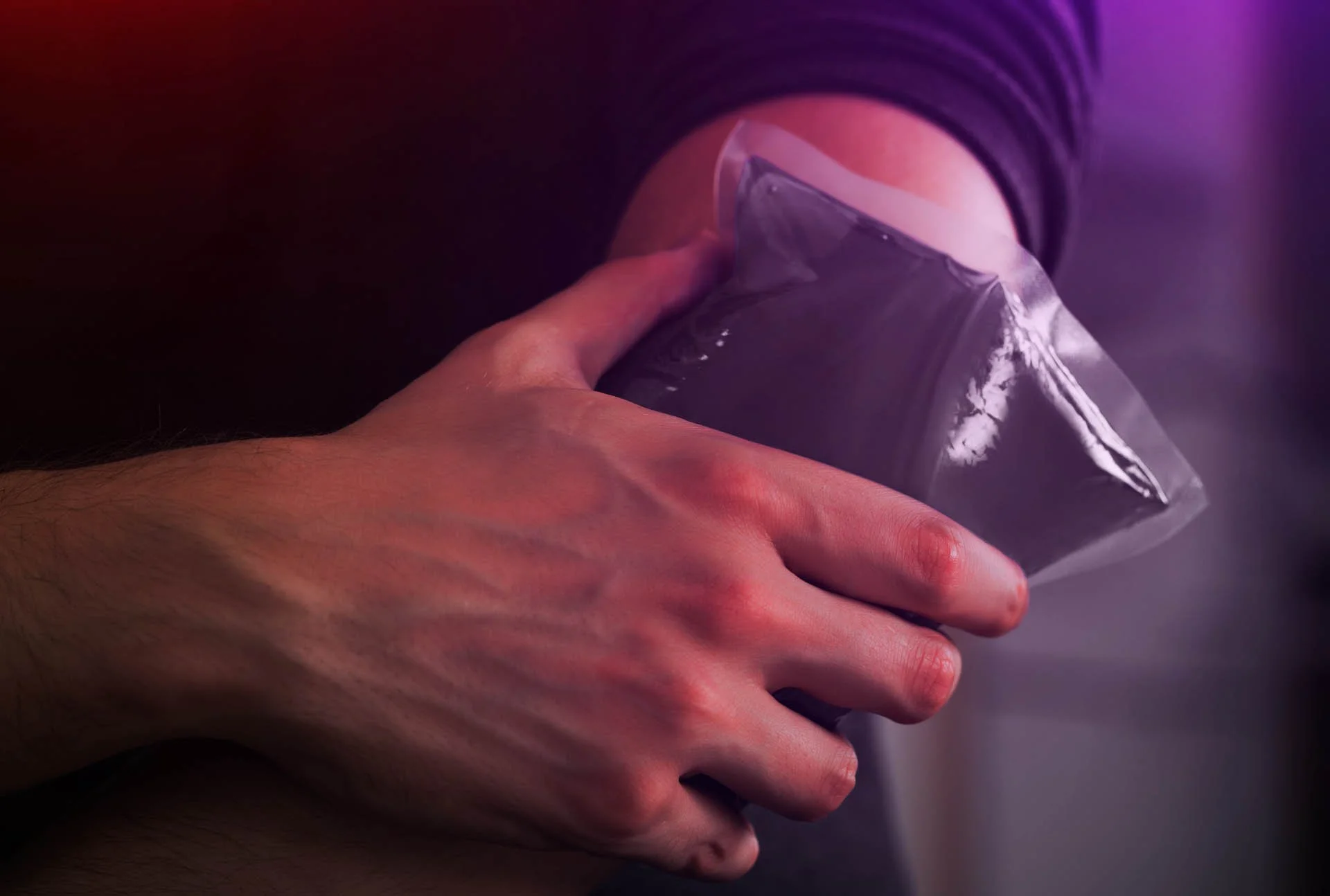
A muscle strain rarely announces itself politely. It shows up mid-set at the gym, halfway through a Saturday morning run, or while lifting a suitcase into an overhead locker, and within minutes the question becomes urgent: reach for the ice pack, or the heat pad? For busy professionals who train regularly and cannot afford weeks on the sidelines, this decision matters more than it might first appear. Choosing incorrectly will not usually cause serious harm, but it can slow recovery and delay a safe return to training. Understanding the physiology behind ice and heat, and which stage of injury each one suits, turns a moment of guesswork into an informed, confident response.
Key Takeaways
Swelling and inflammation after a strain are not a problem to eliminate but the body’s necessary first phase of repair, which is why the goal of ice or heat is to manage this process rather than shut it down entirely.
Ice earns its place in the first 48 to 72 hours because it limits secondary tissue damage and swelling, but its research base is thinner than commonly assumed; a 2024 British Journal of Sports Medicine review found its pain-relief benefit beyond the first few days too small to be clinically meaningful.
Heat should be withheld until the acute swelling phase has passed, since applying it too early can increase inflammation rather than ease it; once introduced, it works by increasing circulation and relaxing tissue rather than restricting blood flow.
Temperature therapy is a supporting measure, not the primary driver of recovery. The PEACE and LOVE framework from the British Journal of Sports Medicine places protection, appropriate loading, and gradual movement at the centre of soft tissue recovery.
Persistent swelling, an inability to bear weight, or sharp localised pain beyond a week are signals to seek clinical assessment rather than continuing to self-manage with ice or heat.
What Actually Happens Inside a Strained Muscle
A muscle strain occurs when fibres are stretched beyond their capacity or torn, typically during rapid deceleration, overload, or an awkward movement. The body responds immediately with a cascade of inflammation: blood vessels in the area dilate, fluid and immune cells move into the tissue, and swelling begins to build. This is not a malfunction. It is the necessary first phase of repair, bringing the cellular resources required to clean up damaged tissue and begin rebuilding it. The discomfort that follows, along with visible swelling or bruising, reflects this process rather than a malfunction. Recognising this is important, because much of the ice-versus-heat debate ultimately comes down to whether, and how much, this natural inflammatory response should be interrupted.
Why Ice Has Long Been the Default First Response
Applying cold to a fresh injury narrows blood vessels and reduces local metabolic activity, which can limit the swelling and secondary tissue damage that accumulates in the hours after a strain occurs. Franciscan Health’s sports medicine team recommends applying ice in short sessions of around 20 minutes during the first 48 to 72 hours, using a barrier between the pack and skin, on the basis that this window is when icing does the most to limit secondary damage and ease pain. Mass General Brigham similarly positions cryotherapy as the first line of defence for acute strains and sprains, largely for its ability to blunt pain, inflammation, and swelling in the immediate aftermath. For a professional who has just tweaked a calf or hamstring, this numbing effect is often the most immediate benefit: it reduces pain enough to allow rest and elevation while the tissue begins its repair process.
Why the Evidence on Ice Is More Complicated Than It Once Seemed
It is worth being direct about something the fitness industry does not always acknowledge: the research base behind icing acute strains is thinner than the popularity of the practice suggests. A 2024 critical review in the British Journal of Sports Medicine found only a small number of controlled trials comparing ice to no treatment for closed soft tissue injuries, and the pain reduction reported beyond the first few days was too small to be clinically meaningful. Other research has found that icing may delay visible swelling after an acute muscle injury without shortening the time it takes an athlete to return to activity. None of this makes ice useless. It means its value lies mainly in short-term pain and swelling control rather than in accelerating healing, and professionals should treat it as a comfort measure rather than a cure.
When Heat Becomes the More Useful Tool
Heat works quite differently. Rather than restricting blood flow, it increases circulation to the area, helps relax surrounding muscle tissue, and can ease the stiffness that tends to set in once the acute inflammatory phase has passed. This makes heat far more appropriate for the days and weeks following the initial injury, once swelling has stabilised and the priority shifts from limiting damage to restoring mobility and function. Franciscan Health’s guidance is clear that heat suits chronic soreness and stiffness rather than a fresh, swollen injury, and warns against applying it while inflammation is still active, since it can increase swelling rather than reduce it. A useful way to think about this: ice calms an angry, swollen area down; heat loosens a tight, recovering one up. Applying heat too early, before swelling has settled, risks working against the body’s own repair timeline rather than supporting it.
Common Mistakes Professionals Make With This Decision
Several recurring errors show up among people who train regularly but are not clinicians. The first is applying heat to a strain within the first day or two simply because it feels more soothing than ice, without recognising this can worsen swelling during the acute phase. The second is over-icing well beyond the point of usefulness, applying cold for hours at a time in the belief that more is better, when brief, spaced applications of roughly 15 to 20 minutes are what the evidence supports. The third is treating ice or heat as a substitute for proper injury management rather than one small part of it. Modern guidance, summarised in the widely cited PEACE and LOVE framework published in the British Journal of Sports Medicine, positions protection, appropriate loading, and gradual return to movement as the true drivers of recovery, with temperature therapy playing a supporting role. A fourth, subtler mistake is assuming a strain that does not improve within a week is simply taking its time, when persistent swelling, an inability to bear weight, or sharp localised pain warrants clinical assessment rather than continued self-management.
What This Means in Practice for a Busy Training Schedule
For someone balancing a demanding job with a consistent exercise routine, the practical takeaway is a simple sequence rather than a fixed rule. In the first 48 to 72 hours after a strain, ice in short sessions to manage pain and swelling, alongside rest, gentle compression, and elevation where practical. Once the initial swelling has settled and the injury feels less acute, usually within a few days, heat can be introduced to ease stiffness and support a gradual return to normal movement and light training. Throughout both phases, the goal is not to eliminate discomfort entirely but to avoid re-aggravating the tissue while it repairs itself, and to resume loading the muscle progressively rather than either resting it excessively or returning to full intensity too soon. Building this sequence into a personal recovery routine, rather than reaching instinctively for whichever pack is closest to hand, is what separates an injury that resolves cleanly within a few weeks from one that lingers and repeatedly interrupts training.
The Core Principle Worth Remembering
Ice and heat are not competing remedies but tools suited to different stages of the same healing process. Ice earns its place immediately after a strain, when controlling swelling and pain is the priority; heat earns its place once that acute phase has passed and the focus shifts to restoring movement and easing stiffness. Neither substitutes for giving the tissue the time and progressive loading it needs to repair properly, and neither should be relied upon alone when pain persists or worsens. Understanding this distinction, rather than defaulting to habit, gives professionals a genuinely useful piece of knowledge the next time a strain threatens to disrupt a training programme.
Frequently Asked Questions
-
Most guidance points to switching once the initial swelling has settled and the injury feels less acute, which is typically within the first 48 to 72 hours but can take a few days longer for more significant strains. There is no fixed cut-off; the practical signal is a reduction in visible swelling and heat or tenderness at the site rather than a set number of hours.
-
Applying heat while swelling and inflammation are still active can increase blood flow to an already congested area, which may worsen swelling rather than relieve it. This is one of the more common mistakes among people managing their own injuries, and it is worth waiting until the acute phase has clearly passed before introducing heat.
-
Yes. Prolonged or overly frequent icing offers little additional benefit and can risk skin damage, including frostbite, if a barrier is not used between the pack and the skin. Short, spaced sessions of around 15 to 20 minutes are generally sufficient to achieve the intended effect on pain and swelling.
-
Current evidence suggests ice is primarily useful for short-term pain and swelling control rather than for accelerating the underlying repair process. Some research has even found that icing can delay visible swelling without shortening the time it takes to return to activity, so it is best treated as a comfort measure alongside, not instead of, proper injury management.
-
Persistent swelling, an inability to bear weight on the affected area, or sharp localised pain that does not settle within a week are reasons to seek a clinical assessment rather than continuing with home care alone. These signs can indicate a more significant injury that self-managed temperature therapy will not resolve on its own.
-
No. Both are supporting tools within a broader recovery approach that includes appropriate protection early on and a gradual, progressive return to loading and movement. Frameworks such as PEACE and LOVE place structured loading and active rehabilitation at the centre of recovery, with temperature therapy playing a secondary, symptom-management role.