The Executive Athlete: How to Stay Fit While Traveling for Business
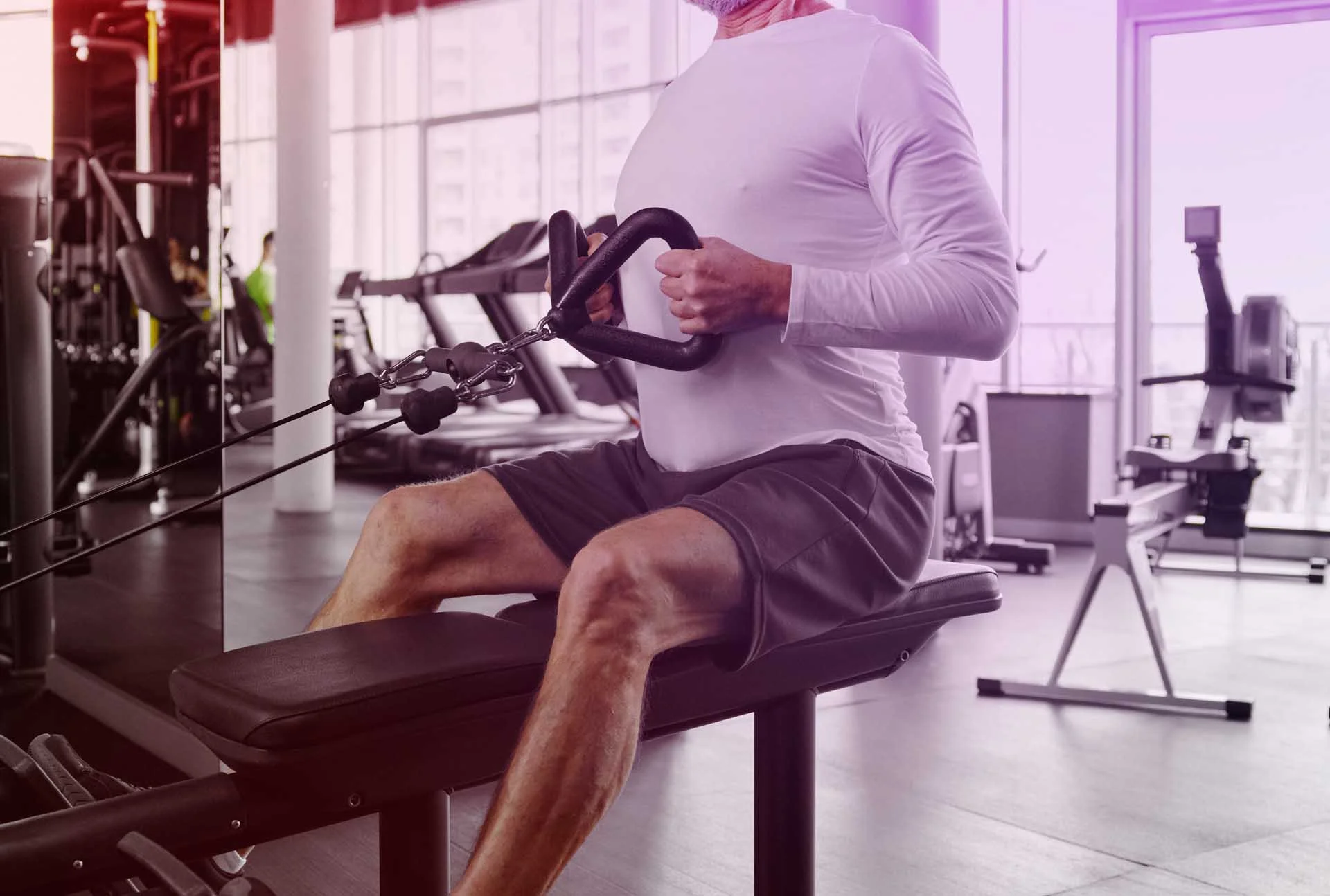
To stay fit while traveling for business, you must prioritise High-Intensity, Low-Volume resistance training to maintain Skeletal Muscle Mass (SMM) and use Strategic Nutrition to manage the "surplus" of corporate dining. Key strategies include performing 20-minute hotel room workouts focusing on foundational hinges and squats, maintaining a "Protein-First" rule at restaurants, and leveraging Online 1-2-1 Personal Training. At Tribe Sweat, our online coaching provides members with bespoke, equipment-flexible programming and real-time accountability, ensuring that a week in a hotel doesn't derail months of Body Composition progress.
Introduction: The Business Trip Saboteur
For many Tribe Sweat members, the biggest threat to their consistency isn't a lack of willpower—it’s the corporate calendar. A three-day summit or a week of international meetings can quickly become a cycle of sedentary flights, late-night room service, "obligatory" hotel breakfasts, and zero gym time. Many people view business travel as a "fitness pause button." They assume that because they don't have access to their usual Shared Personal Training environment or their preferred racks and bars, progress must stop. But at Tribe Sweat, we view our members as "Executive Athletes." An athlete doesn't stop training because they are on the road; they adapt. Whether you are in a high-end hotel in New York or a limited-service lodge in the Midlands, your Body Composition and Longevity don't have to suffer. With the right strategy—and the support of our Online 1-2-1 Training—you can return from your trip leaner and stronger than when you left.
1. The Psychology of the "Maintenance Mindset"
The biggest mistake traveler’s make is the "All or Nothing" trap. They think, "If I can't do my full 60-minute Tribe session, there’s no point in doing anything." On the road, the goal shifts from Maximal Progression to Strategic Maintenance.
The Science: It takes significantly less effort to maintain muscle than it does to build it. Two 20-minute sessions a week are often enough to keep your Skeletal Muscle Mass (SMM) stable and prevent the metabolic slowdown that usually accompanies travel.
The Win: By doing something rather than nothing, you keep the "habit loop" alive. When you return home, you won't have the psychological "friction" of trying to restart your routine.
2. Navigating the "Hotel Gym" (Or Lack Thereof)
Hotel gyms are notoriously unpredictable. You might find a state-of-the-art facility, or you might find a single rusty dumbbell and a broken treadmill. The "Big 3" Travel Movements If you are limited on equipment, focus on movements that offer the highest "metabolic bang for your buck." You don't need a squat rack to signal your body to keep its muscle.
The Rear-Foot Elevated Split Squat: Can be done using a hotel bed or chair. This is a brutal leg builder that requires zero weight to be effective.
The Tempo Push-Up: Slowing down the eccentric (lowering) phase to 4 seconds creates the mechanical tension needed for muscle retention.
The Suitcase Deadlift/Carry: Use your actual luggage to perform "offset" carries, which challenge your core and grip—vital for Longevity.
3. Online 1-2-1 Training: Your Coach in Your Pocket
This is where Tribe Sweat members have a massive advantage. Our Online 1-2-1 Training service was built specifically for the traveler. Bespoke Accountability When you travel, your coach doesn't just give you a "PDF workout." We provide:
Facility Audits: You send us a photo of your hotel gym, and we write a workout specifically for that equipment.
Real-Time Adjustments: Flight delayed? Meetings running late? We adjust your volume and schedule via our app so you don't feel overwhelmed.
Video Form Checks: Record a set on your phone, upload it, and your coach provides feedback. This ensures that even in a strange gym, your Injury Management remains a priority.
4. The "Corporate Dining" Survival Guide
Nutrition is usually where business trips go to die. The combination of "free" food, client dinners, and travel fatigue creates a perfect storm for fat gain. The "Protein-First" Rule At any buffet or restaurant, fill your plate with a high-quality protein source first (steak, fish, chicken, eggs). Protein is highly satiating and has a high Thermic Effect of Food (TEF). By eating your protein first, you naturally reduce the space left for high-calorie, low-nutrient sides. The "One-Drink" or "One-Course" Policy You don't have to be the "boring" person at the table, but you do need boundaries. Pick one: have the dessert or have the wine. Have the appetiser or the bread basket. This simple rule allows you to enjoy the social aspect of business dining without blowing your TDEE (Total Daily Energy Expenditure) out of the water.
5. Combatting "The Flight Effect": Mobility and Inflammation
Long-haul travel is inflammatory. Sitting in a cramped seat for hours leads to "stiff" joints, poor circulation, and often triggers Back Pain. The "Anti-Sitting" Routine In your 1500-word article on Mobility, we discussed "synovial fluid." Travel dries out your joints. We provide our traveling members with a 10-minute "Hotel Room Flow":
Worlds Greatest Stretch: Opens the hips and thoracic spine.
90/90 Hip Switches: Counters the tightness from sitting.
Cat-Cow: Rehydrates the spinal discs. This isn't just about feeling better; it’s about ensuring that when you get back to the Tribe Sweat facility, you aren't starting from a place of injury or extreme stiffness.
6. Managing the "Travel Stress" Hormone: Cortisol
Business travel is inherently stressful. Time zone changes, high-stakes meetings, and poor sleep spike Cortisol. As we know, chronic cortisol leads to Visceral Fat storage and muscle breakdown. The Sleep Protocol Sleep is the "Anabolic Window" that saves your muscle.
Darkness: Use an eye mask. Hotel "blackout" curtains are rarely perfect.
Temperature: Set the hotel AC to 18°C. A cool room is essential for deep, restorative sleep.
Magnesium: Many of our members use magnesium glycinate while traveling to help calm the nervous system and improve sleep quality.
7. Tracking Progress on the Road You won't have an InBody 270 in your hotel room, but that doesn't mean you stop tracking. We encourage our traveling members to track Subjective Markers:
RPE (Rate of Perceived Exertion): How "heavy" did that hotel workout feel?
Bio-Feedback: How is your energy, hunger, and mood?
Clothing Fit: Does your suit feel the same on Friday as it did on Monday? These markers, combined with your coach’s oversight via the Online 1-2-1 platform, provide enough data to steer the ship until you’re back for your official re-scan.
8. Summary: The Executive Athlete Checklist
Before your next trip, run through this Tribe Sweat checklist:
Sync with your Coach: Inform them of your destination and hotel facilities.
Pack the Essentials: Resistance bands, a lacrosse ball for mobility, and your protein powder.
Schedule your "Non-Negotiables": Block out 20 minutes in your calendar for your workout just as you would a board meeting.
Hydrate: Aim for 1 litre of water for every 3 hours of flying.
Conclusion: Travel is an Opportunity, Not an Obstacle At Tribe Sweat, we don't believe your fitness should be a prisoner to your location. Business travel is a chance to prove that your results are built on Consistency and Systems, not just proximity to a gym. With our Online 1-2-1 Training, you have the expertise of the Tribe with you in every time zone. You can navigate the hotel buffet, conquer the hotel gym, and manage the stress of the road with total confidence. Don't let your business trip be the reason you plateau. Let it be the reason you prove how resilient you’ve become.